Last updated November 22, 2026
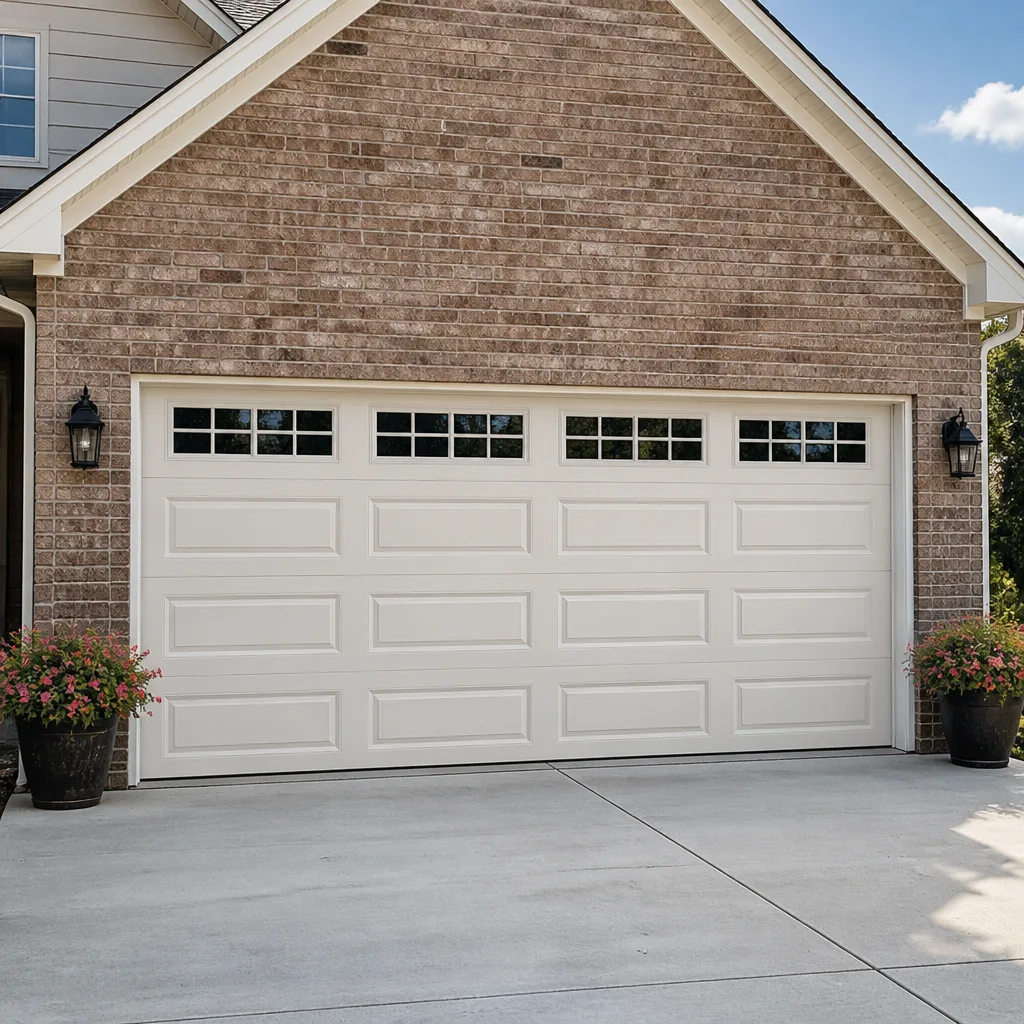 Raised-panel steel
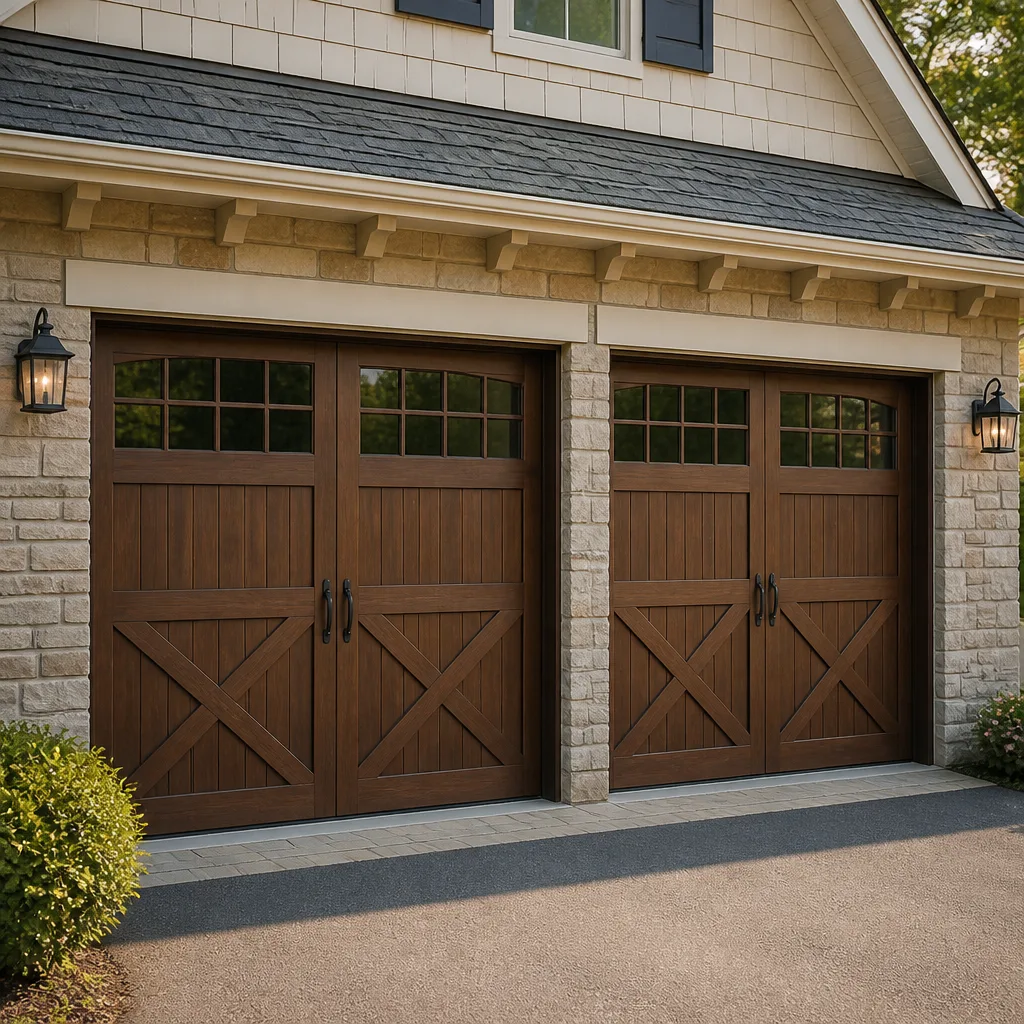 Carriage house
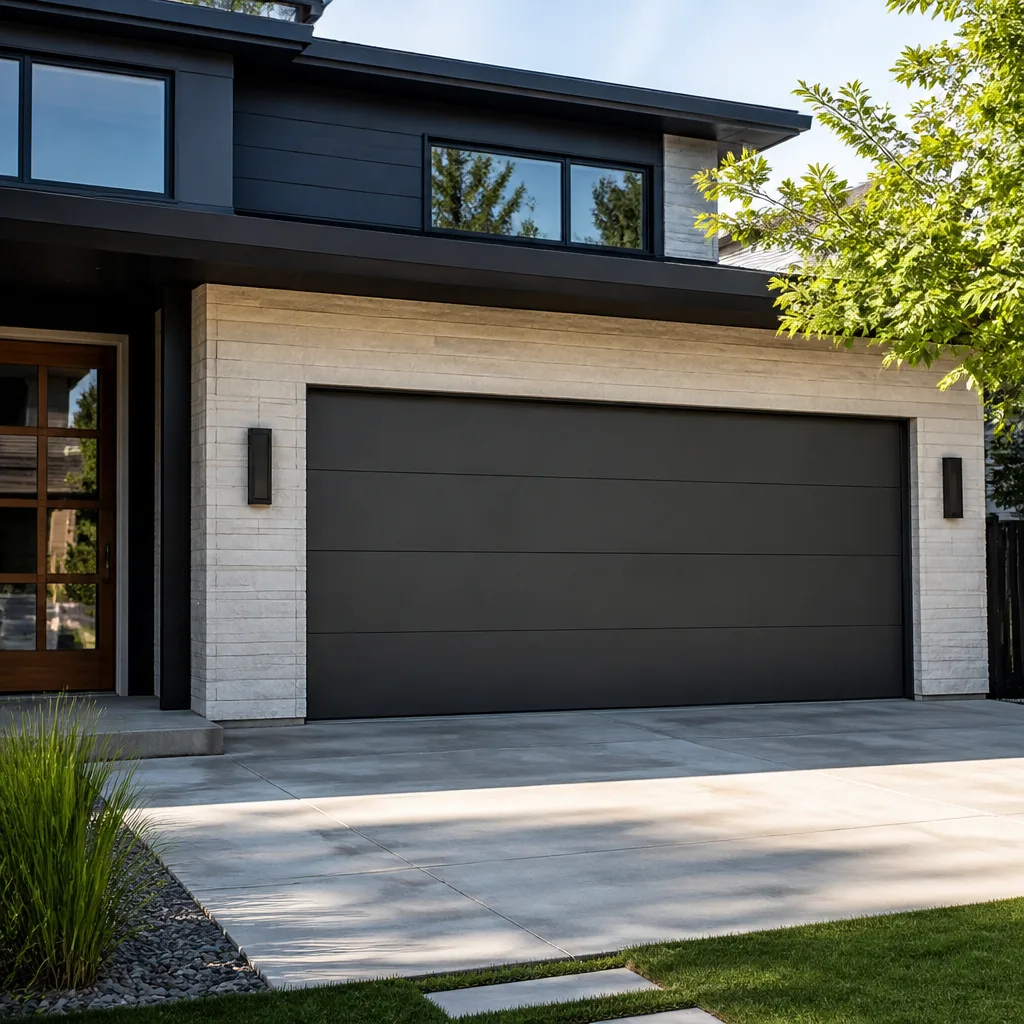 Modern flush
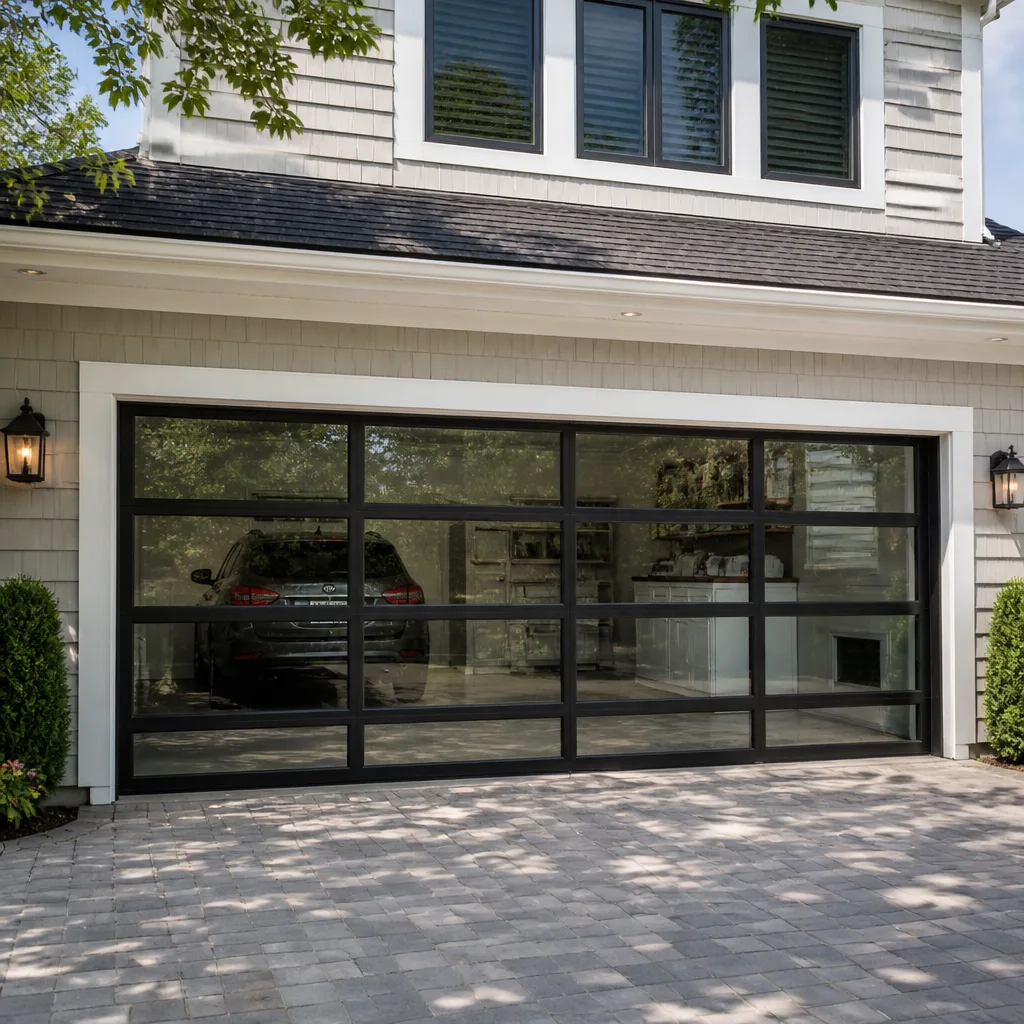 Full-view glass
 LiftMaster openers
 Chamberlain openers
Full 25-point door and opener safety check with every visit - springs, cables, rollers, tracks, and your LiftMaster or Chamberlain opener included
You get a price before we start. It does not change when the pro arrives.
Get your free estimateGarage Door Repair Maintenance Checklist for Broomfield Homeowners
Most garage door checklists floating around the internet are written for a climate that doesn’t exist here. They tell you to “lubricate twice a year” and “inspect for wear,” then leave you to guess what wear looks like, which lubricant survives a Front Range cold snap, and which parts actually fail first. Here’s the thing we’ve learned working on doors across Broomfield: the number-one source of garage door failure in Colorado isn’t age or brand. It’s deferred lubrication during winter, when cold thickens old grease into a paste that grinds rollers and strips plastic gears inside the opener. This checklist is built around what actually breaks here, in the order it tends to break, with pass/fail criteria so you know when to call and when to keep going.
Quick Answer
Run a 20-minute garage door maintenance check twice a year in Broomfield: once in late fall before the first hard freeze, and once in spring after the freeze-thaw cycle settles. Focus on lubrication with a cold-rated product, a spring balance test, track alignment, and auto-reverse safety. Anything on that list that fails its pass/fail check means a technician needs to look at it, not a homeowner with a wrench.
Styles & brands we work with
- Raised-panel steel
- Carriage house
- Modern flush
- Full-view glass
- LiftMaster openers
- Chamberlain openers
Table of Contents
- Why Broomfield’s Climate Changes What Breaks First
- The Ranked Maintenance Checklist: What Fails First in Broomfield
- The Right Lubricant (and the Ones That Fail Below 20°F)
- How to Test Spring Balance with a Level and a Tape Measure
- How to Check Track Alignment and Roller Condition
- How to Test Auto-Reverse Sensitivity Safely
- What to Log Every Time (and Why It Pays Off Later)
- A Twice-a-Year Schedule That Fits Broomfield Weather
Why Broomfield’s Climate Changes What Breaks First
Broomfield sits in a specific spot on the Front Range where winter temperature swings are sharp and frequent. A January week can hit the mid-fifties one afternoon and drop below zero the next morning. Every one of those swings is a small mechanical event for your garage door: metal expands, contracts, and flexes. Springs take stress cycles. Seal strips lose elasticity. Grease that was moving freely at 55°F turns into a sticky solid at 5°F.
That’s why the failures we see in Broomfield cluster differently than the ones on a generic list. Spring failure, opener gear stripping, and roller binding all spike the same way: they start during a cold snap, not in July. The door goes up a little slow for a week, then one morning it won’t go up at all.
What the Two-Season Cycle Really Looks Like
- Late fall (October-November): The pre-freeze window. Anything you’re going to lubricate or adjust, do it now, before cold locks in the old grease and stiffens the seals.
- Midwinter (December-February): The diagnostic window. If the door sounds different, moves slower, or struggles to close all the way, this is when you notice it. Cold amplifies existing problems.
- Spring (March-April): The thaw-and-reassess window. The freeze-thaw cycle has been punishing the door for four months; now you check what got bent, loosened, or worn.
If you’re running this checklist for the first time and the door has been neglected for years, don’t be surprised if three or four items fail. That’s normal for Broomfield. Doors here tend to fail in a predictable pattern once they’ve been through a few unmaintained winters, and the checklist below is ordered to match that pattern.
The Ranked Maintenance Checklist: What Fails First in Broomfield
Here’s the checklist, ordered by how often each item fails on Front Range doors, not alphabetically. If you only have time for the top three, do the top three.
- Lubricate rollers, hinges, and hinges’ pivot points. Highest failure frequency. Cold-stiffened grease on these parts is the single most common reason a door starts dragging, and dragging is what overloads the springs.
- Test spring balance. Second most common failure. A garage door spring that’s lost tension makes the opener do work it wasn’t designed for, which strips gears.
- Check opener drive chain or belt tension. A loose chain slaps and wears; a tight one strains the motor. Both are common by midwinter.
- Inspect track alignment. Freeze-thaw can shift a track a fraction of an inch, which is enough to make rollers bind and squeal.
- Test auto-reverse safety. Not a common failure, but the one with the highest stakes. It’s also the item most homeowners skip.
- Check weather seal and bottom rubber. The bottom seal cracks from cold more than most people expect, and that lets snowmelt and wind into the garage.
- Inspect panels and hinges for bent or loose hardware. Usually from a hit to the door or a roller that jumped track, not from age.
- Test remote and wall control response. The last item, but worth confirming. A weak remote signal is easier to notice than a dead wall button.
That’s the order we recommend in Broomfield. If items one through four pass and five through eight are clean, you’re done for the season. If something fails, the pass/fail criteria in each section below tells you whether to keep going or stop and call. For the mechanical items that go beyond maintenance, our garage door repair page explains how a technician diagnoses the deeper problem.
The Right Lubricant (and the Ones That Fail Below 20°F)
Most garage door failures we see in Colorado trace back to using the wrong lubricant, or none at all. Here’s the short version: use a silicone-based or white lithium grease rated for cold weather, and skip anything that gets tacky when it cools. That’s the rule to remember.
Lubricants That Work in Broomfield
- Silicone spray lubricant: The top pick for rollers, hinges, and pivot points. It stays fluid at low temperatures and doesn’t attract dust the way oil-based products do.
- White lithium grease in a spray can: Good for hinge pivot points and the opener’s drive screw or rail. Make sure the can says it’s cold-rated.
- Dry PTFE (Teflon) spray: Works well on tracks in dusty or windy conditions. Dust sticking to wet lubricant is a real problem here when spring winds kick up Front Range grit.
Lubricants That Fail Below 20°F
- Standard automotive grease: Too heavy. It works fine in summer and locks up in January, which is exactly when you need it to keep working.
- WD-40 (the original formula): Fine as a light cleaner or short-term fix, but it’s not a lasting lubricant. It evaporates and leaves surfaces drier than before.
- Engine oil or chain oil: Attracts dust and gets gummy in cold. It’ll run off the hinge and leave the pivot point dry.
Two important cautions. Don’t lubricate the tracks themselves. Tracks are meant to be dry, clean metal; oil attracts dust that packs into the roller wheel and causes binding. And don’t spray lubricant into the opener motor housing or onto the spring coils. Springs are a hands-off component. They’re under extreme tension and a very small change in surface condition can matter, but the real risk is that any homeowner reaching up near the spring assembly is a homeowner who could get seriously hurt. Our garage door spring repair page covers what we do and why we recommend never touching them.
Log which lubricant you used each time. If you switch products, you’ll want to know the last one applied before the door started acting up.
How to Test Spring Balance with a Level and a Tape Measure
The spring balance test tells you whether the door’s springs are still doing their share of the lifting. A balanced door feels roughly the same weight in every position; an unbalanced door feels heavy at the bottom, then suddenly light, then heavy again as it moves. If the springs are tired, the door is heavy throughout and the opener does all the work.
You don’t need tools beyond a level and a tape measure, and you must do this test with the opener disengaged. Here’s how:
- Close the door. Pull the red release cord hanging from the opener rail to disconnect the door from the opener. The door should now be movable by hand.
- Lift the door to about waist height. About 3 to 4 feet off the ground.
- Let go. A balanced door should stay where you let go, or drift only slightly.
- Repeat at chest height and shoulder height. Note any point where the door sags or drops.
- Measure. Use the tape measure to confirm the door is the same height on both sides at each stop. Use the level to check that the door is level side-to-side.
Pass: The door stays put within a few inches at each stop, and stays level side-to-side.
Fail: The door drops fast at any height, sags on one side, or takes real effort to lift. A failing balance test means the springs are the problem. Don’t try to adjust them; springs are the most dangerous component on a garage door and the one most often mishandled. Stop the checklist and call a technician.
Re-engage the opener by pulling the release cord again once you’re off the door and the door is in the closed position. The door should click back onto the carriage.
How to Check Track Alignment and Roller Condition
A misaligned track makes the door drag, which overloads the opener and the springs, so it’s worth checking every season. You don’t need a tool for this one, just patience and an eye for gaps.
- Inspect the gap. Stand back and look at both vertical tracks. The gap between the track and the roller should be even side-to-side and top-to-bottom. Uneven gaps mean the track has shifted.
- Run the door up and down at slow speed. Watch for any roller that jumps, rubs, or seems to be riding on the wrong side of the track.
- Feel each roller. Turn it by hand (with the door disengaged and stopped). It should spin freely without grinding.
- Check the track for dents or bend. Any kink in the track will catch a roller. A kink usually means the door was hit or something bumped the track.
- Look at the roller wheels. Worn wheels get flat spots, which cause the door to shake and thump. If a wheel is flaking or cracked, it needs to be replaced.
Pass: Tracks are gap-even, rollers spin free, no kinks or flat spots, and the door moves smoothly without a side-to-side shimmy.
Fail: A track is out of alignment, a roller is catching, or you can see a dent. Tracks are adjustable and not dangerous to look at, but adjusting them wrong can compound the problem. Call a technician if a track needs realignment, and always call if a roller has jumped the track.
Doors that get hit or bumped are the most common cause of misaligned tracks in Broomfield. If your door was recently struck by a car, a bicycle, or a basketball, this check matters even more.
How to Test Auto-Reverse Sensitivity Safely
Auto-reverse is the safety feature that sends the door back up if it feels resistance while closing. It’s the most important safety feature on your garage door and the one most often ignored. Here’s how to test it without putting anything dangerous under the door.
- Place a roll of paper towels or a folded towel under the middle of the door. Something soft and about 2 inches tall. Never use an object too rigid; if the door comes down hard it can damage the door panel or the motor.
- Close the door using the wall control. Stay in the garage and watch.
- Watch for the reverse. The door should contact the object and immediately stop and reverse to fully open.
- Test the photo-eye sensors. With the door closing, wave your foot in front of the sensors (the small eyes mounted at the bottom of the tracks on each side). The door should reverse.
- Check the sensor lights. Both sensor indicator lights should be solid, not blinking. A blinking sensor light means the beam is misaligned or blocked.
Pass: The door reverses on contact with the object and reverses when the sensor beam is broken. Both lights are solid.
Fail: The door keeps going down, reverses only after significant pressure, or the sensor lights blink. Don’t use the door until this is fixed. Auto-reverse failure is the one item on this list where we’d call a technician today, not next week. Our garage door opener repair team handles sensor and safety system issues on most major openers, including the LiftMaster, Chamberlain, and Genie systems we see most often in Broomfield, plus Amarr, Wayne Dalton, Craftsman, and Raynor doors.
What to Log Every Time (and Why It Pays Off Later)
A maintenance log turns a guessing game into a maintenance plan. Every time you run the checklist, jot down four things:
- Date: The date you performed the checklist.
- Lubricant used: The exact product name and type. This tells a technician or your future self what’s already on the door.
- Balance test result: Pass/fail, and where the door was heaviest.
- Auto-reverse result: Pass/fail, plus anything that looked off.
Three or four logged entries is enough to spot a pattern. If the balance test failed in fall and failed again in spring, the springs are losing tension. If the door got noisy the same week each year, that’s the cold. When you do call a technician, the log saves time on diagnosis, and it gives you a factual basis for repair-versus-replace decisions. A door that’s had three balance fails in two years is having spring trouble. A door that’s been clean for four seasons and started dragging is probably a lubricant or roller issue, not a spring.
We mention this because it changes the conversation. When a homeowner can tell us “the balance test failed in November and again in March, and we’ve been using silicone spray,” the diagnosis gets faster and easier.
A Twice-a-Year Schedule That Fits Broomfield Weather
Broomfield’s two-season pattern gives you two natural maintenance windows. The goal is a 20-minute session twice a year that stays ahead of the failure pattern, not a weekend project.
Fall Session (October-November, Before the First Hard Freeze)
- Lubricate rollers, hinges, and pivot points with a cold-rated product. This is the session that matters most.
- Run the balance test.
- Check the drive chain or belt tension.
- Test auto-reverse and photo-eye sensors.
- Inspect the weather seal and bottom rubber for cracking.
- Log all results.
Spring Session (March-April, After the Thaw)
- Re-lubricate anything that moved during winter.
- Run the balance test again.
- Check track alignment now that the ground has shifted.
- Inspect roller wheels for wear from the cold months.
- Test auto-reverse again (a winter’s worth of temperature change can shift sensor alignment).
- Log all results.
If the door is loud, slow, or struggling during the winter months, that’s not a reason to add a session; it’s a diagnostic clue. Note it, and act on it in spring, or call earlier if auto-reverse is failing. Garage doors are heavy machinery, and the safest move when something feels wrong is to stop using it until a technician takes a look. Our team at Broomfield Garage Door Repair Pros works on the mechanical and the electronic side of the door under one service call, so you’re not coordinating two contractors.
Common Mistakes to Avoid
- Lubricating the tracks. Tracks are meant to be dry metal. Oil catches the grit that blows through Broomfield in spring, packs into the roller wheels, and makes the door drag worse. Lubricate the rollers and hinges, not the tracks.
- Using the wrong lubricant. Standard auto grease, original WD-40, or engine oil all fail in cold. They feel fine in October and lock up in January.
- Adjusting springs yourself. Springs are under extreme tension. Homeowners read that a spring needs “one turn” and try it. Don’t. This is the job that sends people to the emergency room. Our spring specialist handles it.
- Skipping the fall lubrication session. This is the one that prevents the failures that show up in February.
- Testing auto-reverse by putting your hand under the door. Never. Use a soft object like a roll of paper towels. If the door fails to reverse, you don’t want your hand under it.
- Replacing a whole door when a panel would do. If one panel is dented but the door is otherwise solid, a technician can often replace the panel. A brand-agnostic specialist should give you an honest repair-versus-replace call, not default to a new door.
- Ignoring the sensor light. A blinking photo-eye sensor means the door can’t safely tell if something is in the way. Don’t run the door until it’s fixed.
See the difference
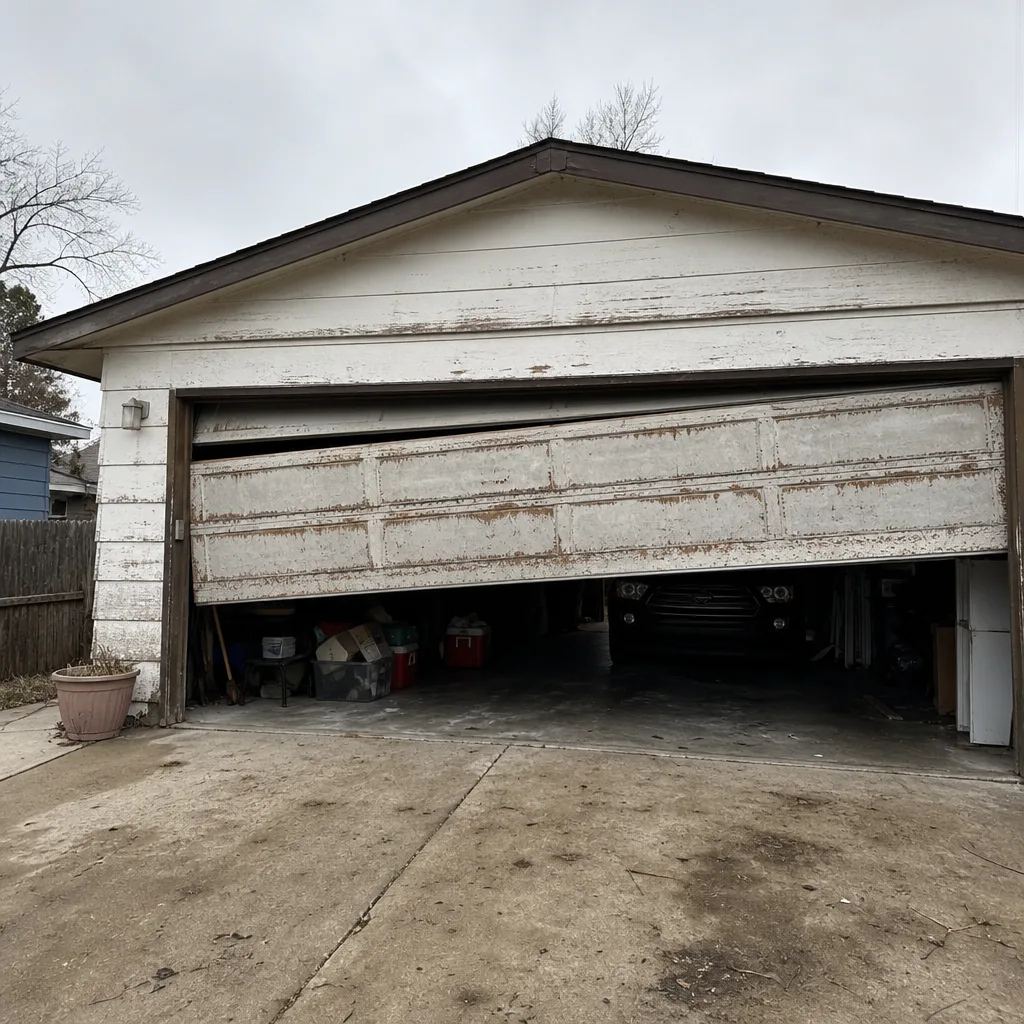 Before
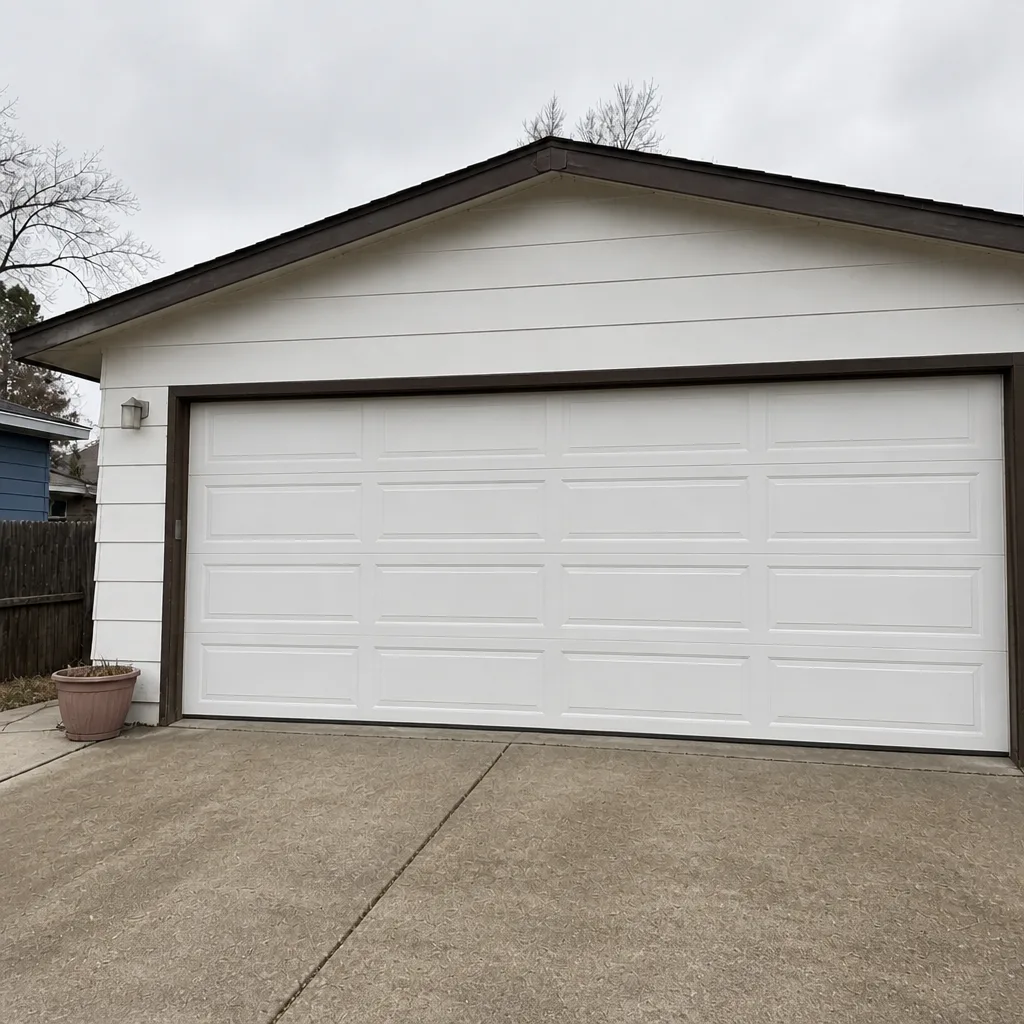 After
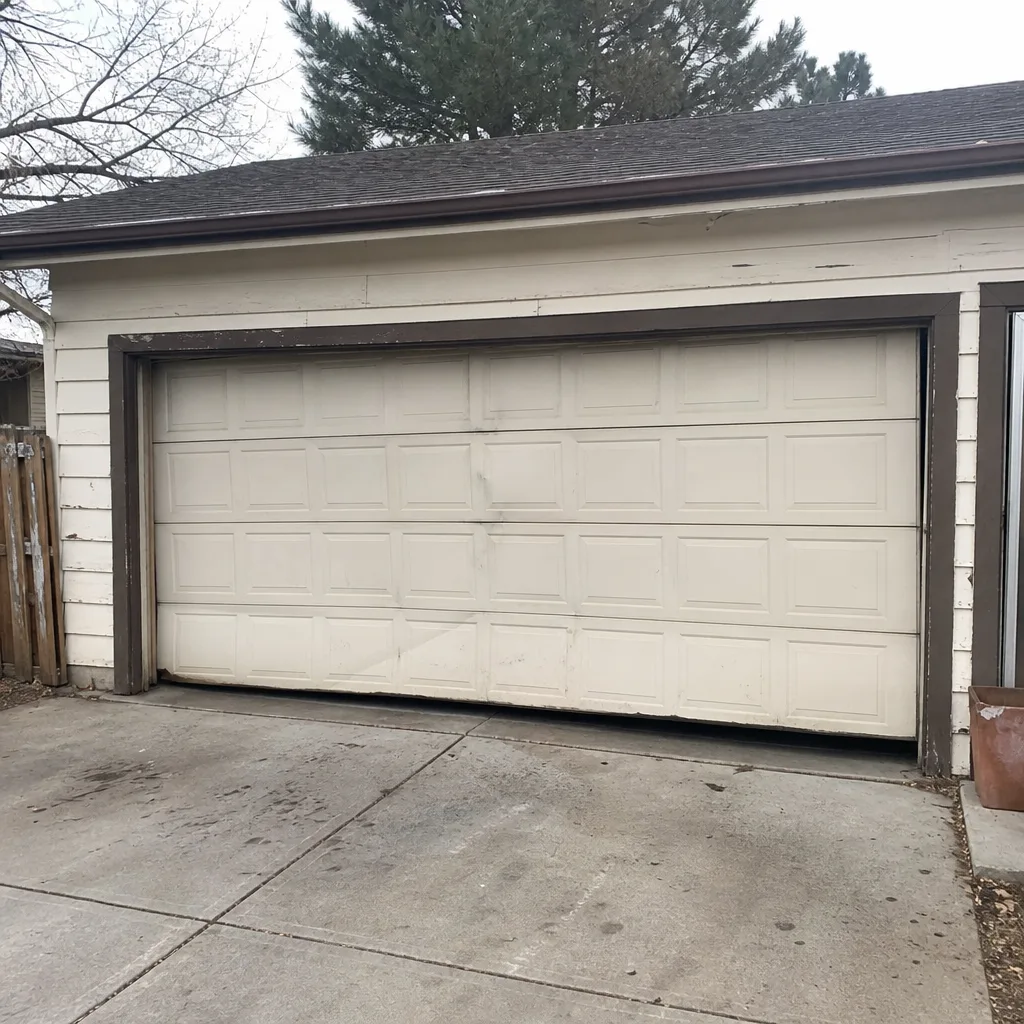 Before
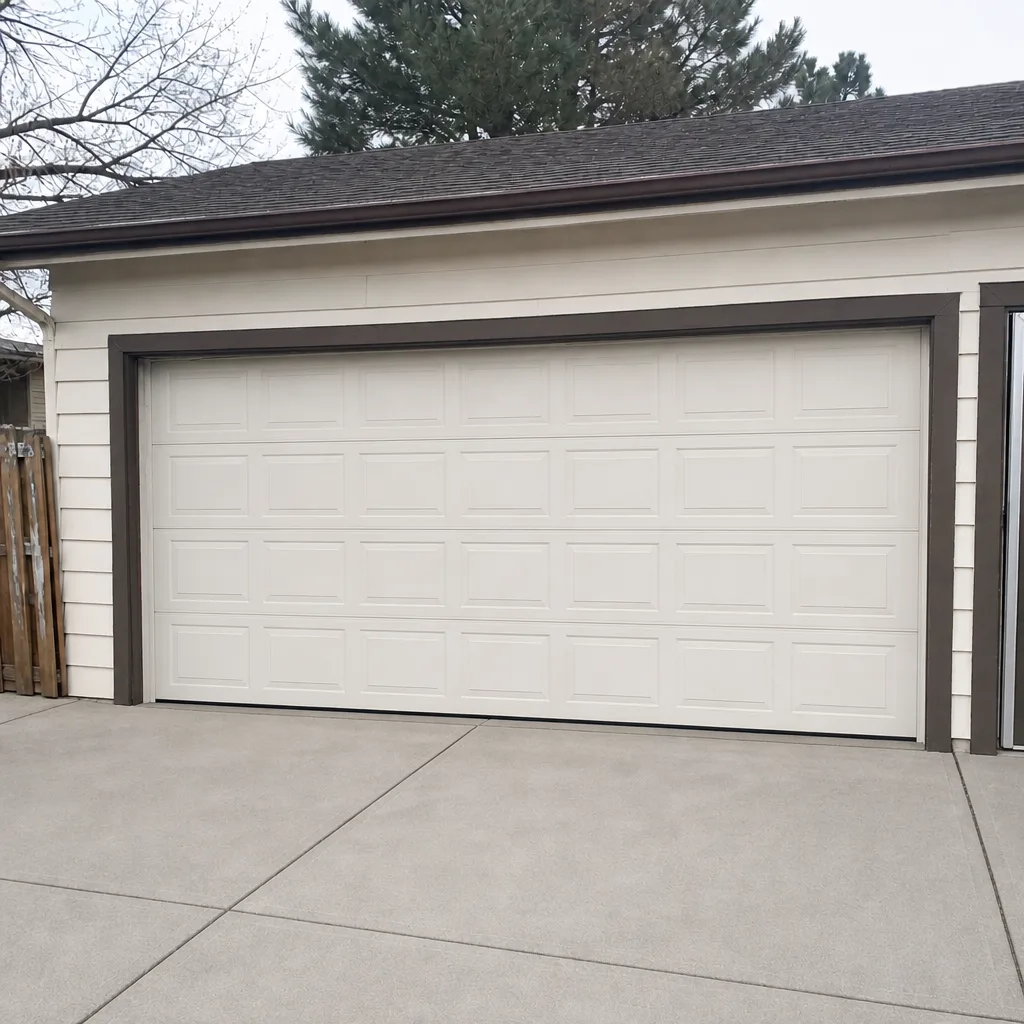 After
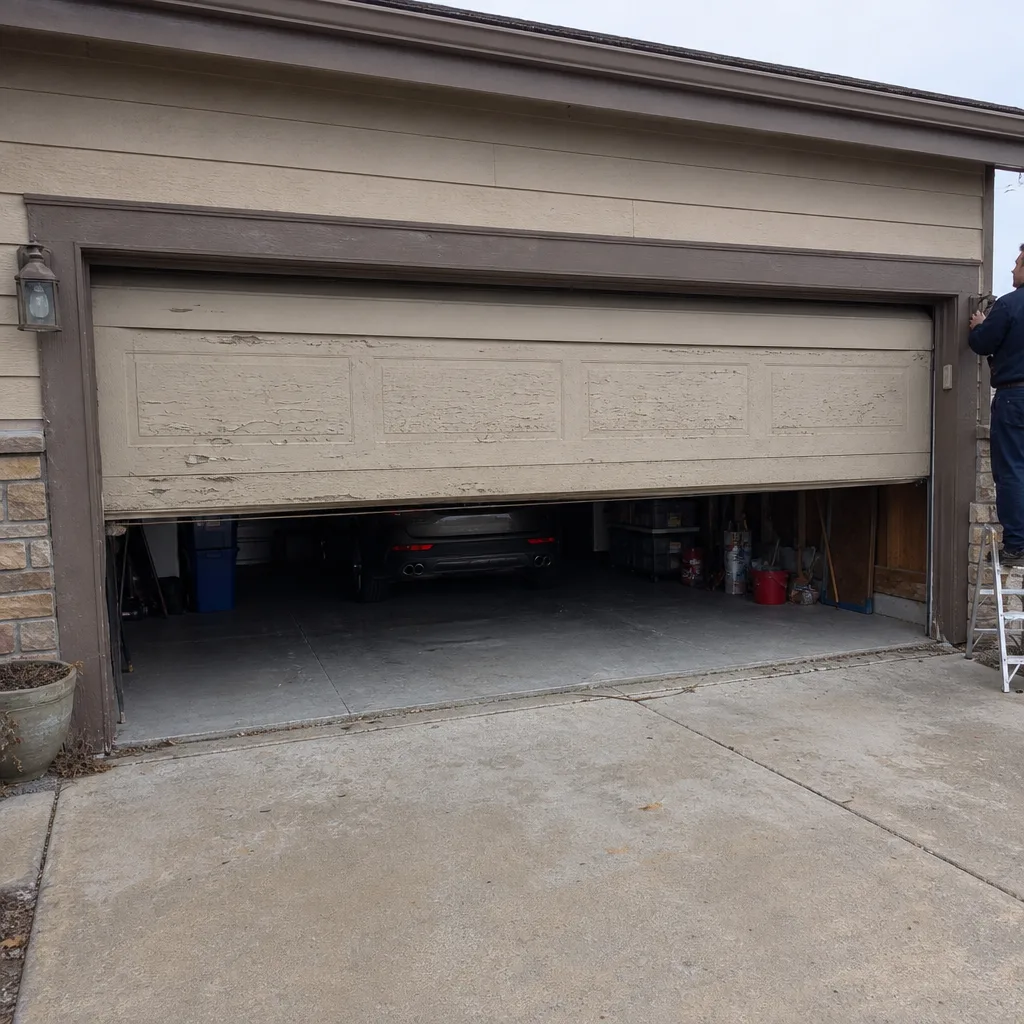 Before
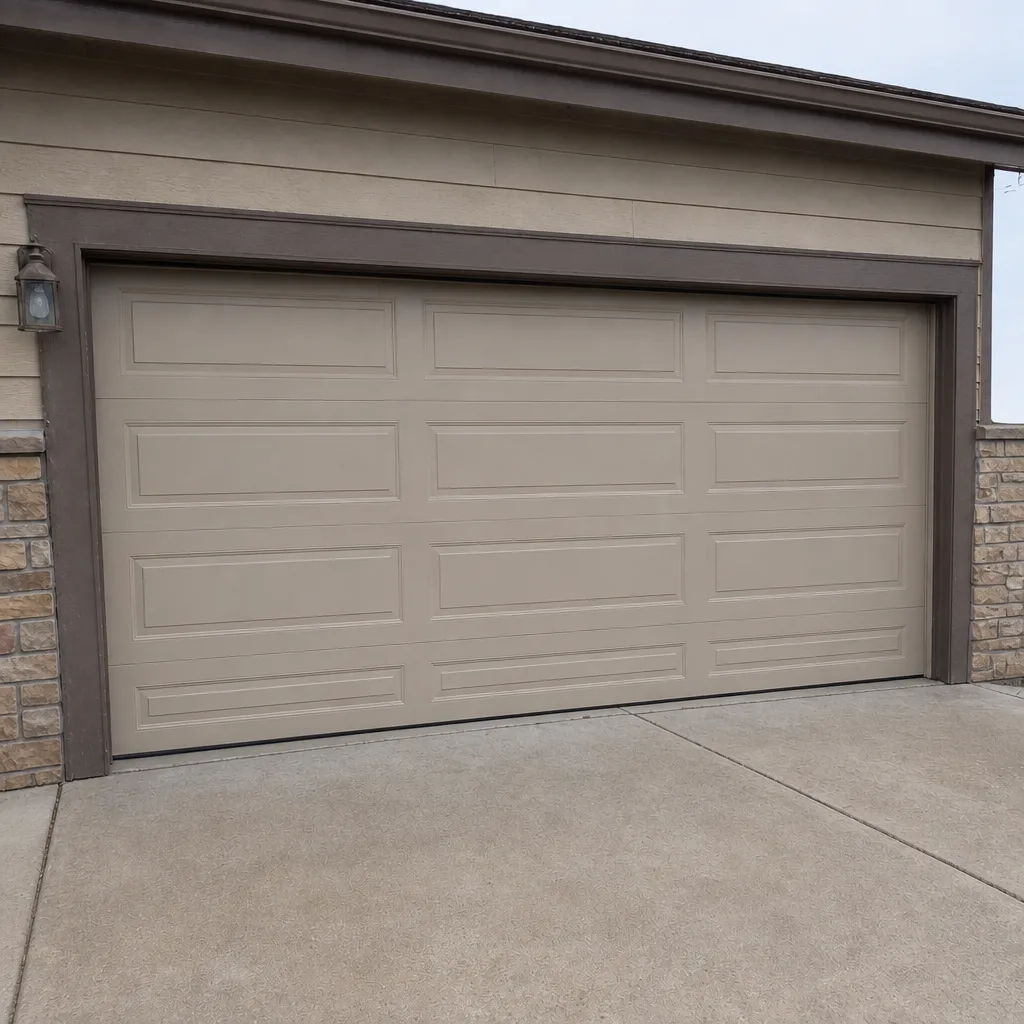 After
When to Call a Professional
Call a professional if any of these are true: the balance test fails, auto-reverse fails or reverses only after heavy pressure, a roller has jumped the track, a track is visibly bent, a spring is visibly broken or has a gap in the coil, the door won’t close fully, or the opener’s gears sound like they’re grinding. Also call if the door has been hit by a vehicle and you’re not sure of the extent of the damage. And call if a repair needs parts from your specific opener’s brand; technicians trained on LiftMaster, Chamberlain, Genie, Craftsman, and Raynor systems can usually diagnose and fix the same day. If you’re in Broomfield, our team at Broomfield Garage Door Repair Pros offers free estimates and emergency service when the door fails outside normal hours. Call (833) 625-1667 to schedule. We quote the price before any work starts, so the number you agree to is the number you pay.
Frequently Asked Questions
Twice a year: once in late fall before the first hard freeze and once in spring after the thaw. The fall session is the preemptive one because it prevents the winter failures that start when grease thickens, and the spring session catches the wear from four months of cold cycling.
Use a cold-rated silicone spray or white lithium grease on rollers and hinges. Skip standard automotive grease, original WD-40, and engine oil; they get tacky or gummy below 20°F, which is exactly when you need them working. Call (833) 625-1667 if you’re unsure what’s already on the door and want to know before adding more.
Spring repair for one spring typically runs between $180 and $340, and a matched pair is usually replaced together, so a pair runs about twice that. The written estimate sets the final price, and we quote it before any work starts. Call (833) 625-1667 for a free estimate.
No. Springs are under extreme tension and are the most dangerous part of a garage door system. The correct move when the balance test fails is to stop using the door and call a technician; we handle spring repair as a dedicated service because it’s the job most often mishandled. Call (833) 625-1667.
Yes. Our technicians are trained on LiftMaster, Chamberlain, Genie, Clopay, Amarr, Wayne Dalton, Craftsman, and Raynor systems, so we can work on most openers and doors already in a Broomfield garage. That includes opener repair, spring repair, panel repair, and full installations under one service call, so you don’t coordinate two contractors. Call (833) 625-1667 for a free estimate.
First, check the photo-eye sensors. Both indicator lights should be solid; if they’re blinking, the beam is blocked or misaligned, and that’s usually a quick fix, but don’t run the door until it’s fixed. If the sensors are fine and the door still won’t close, that could be an auto-reverse sensitivity issue or a track or opener problem. Stop using the door and call us. Emergency service is available for failures that can’t wait until the next day. Call (833) 625-1667.
The Bottom Line
The garage door maintenance checklist that matters in Broomfield is the one built around how doors actually fail here. Cold-stiffened grease is the leading cause, so fall lubrication is the highest-value 20 minutes you’ll spend on the door all year. Spring balance, track alignment, and auto-reverse are the three tests worth doing every season, and each has a clear pass/fail so you know when to stop and call. Log everything, use a cold-rated silicone or lithium product, and never touch the springs yourself. That’s the whole system: 20 minutes twice a year, in step with the Front Range freeze. If something fails, our team at Broomfield Garage Door Repair Pros is one call away at (833) 625-1667 for a free estimate.
Written by the team at Broomfield Garage Door Repair Pros.