Last updated November 22, 2026
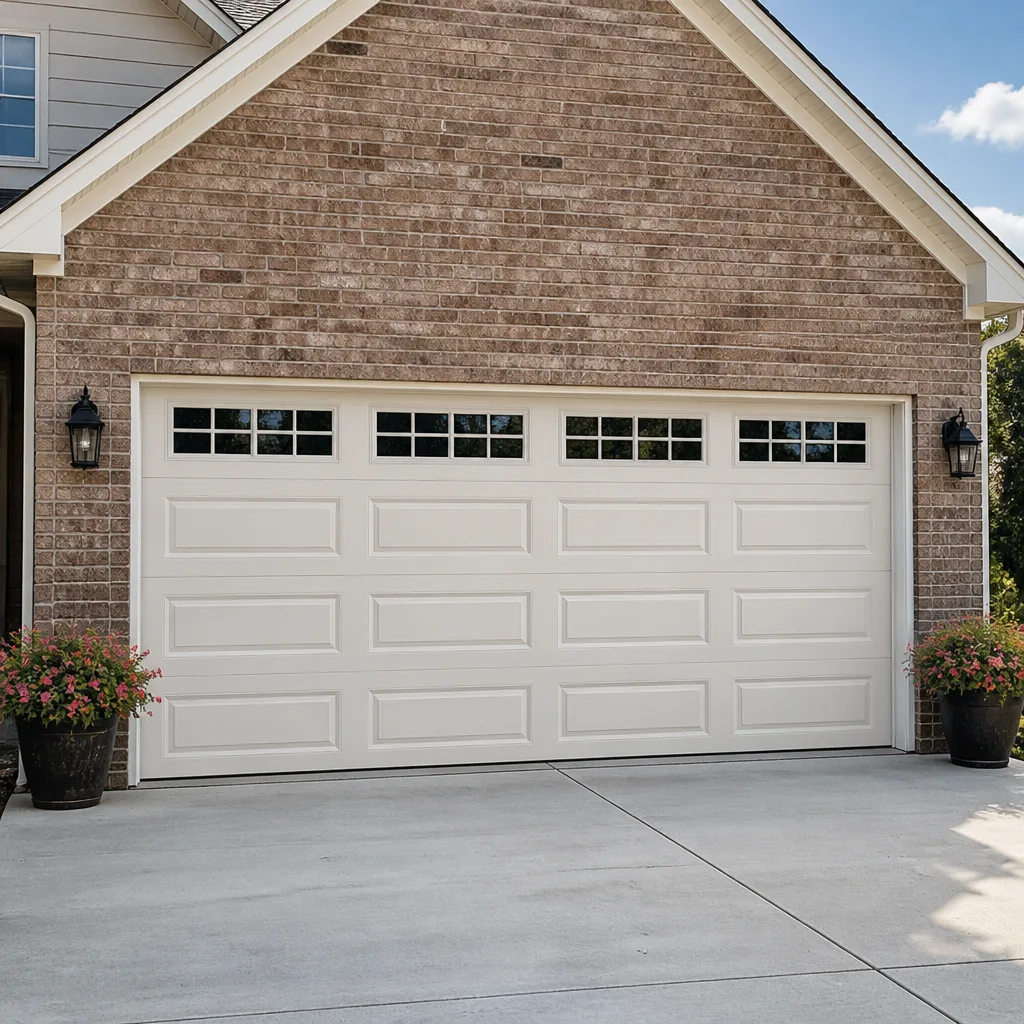 Raised-panel steel
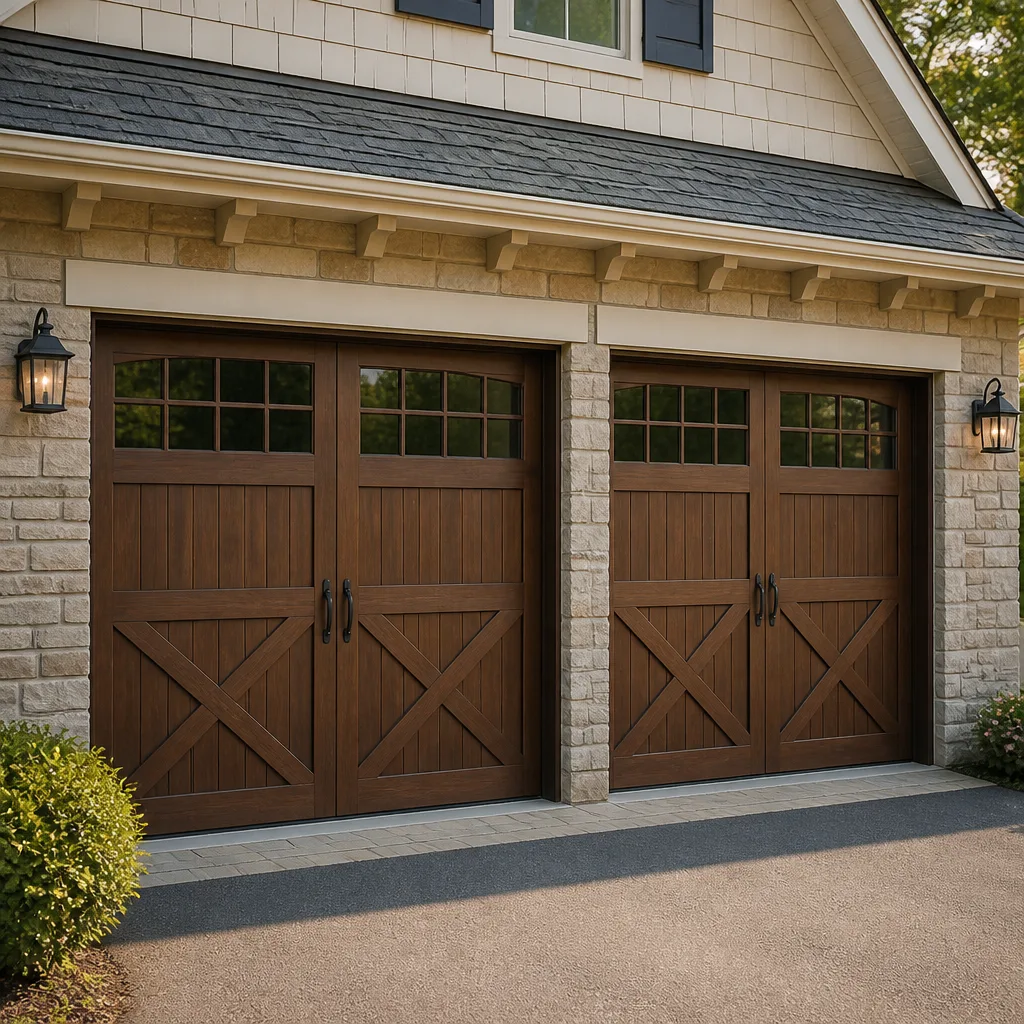 Carriage house
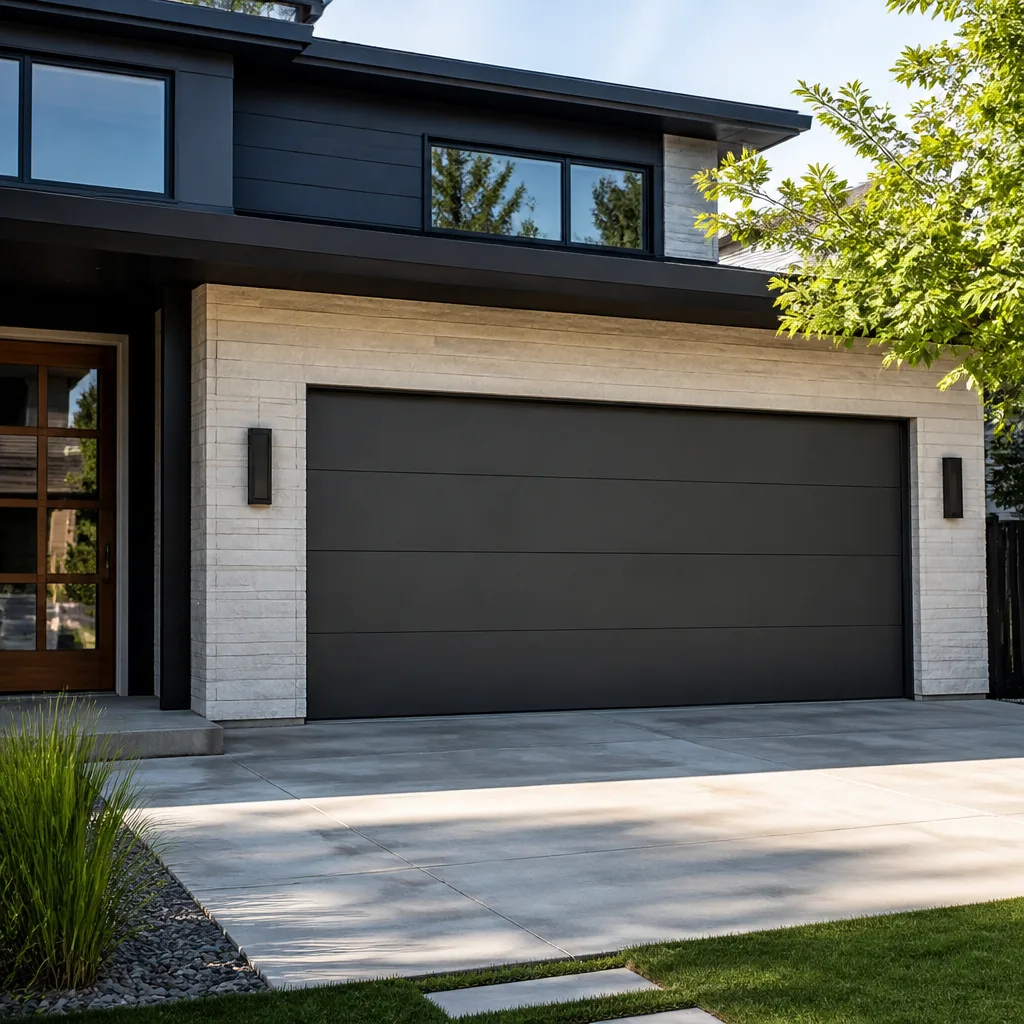 Modern flush
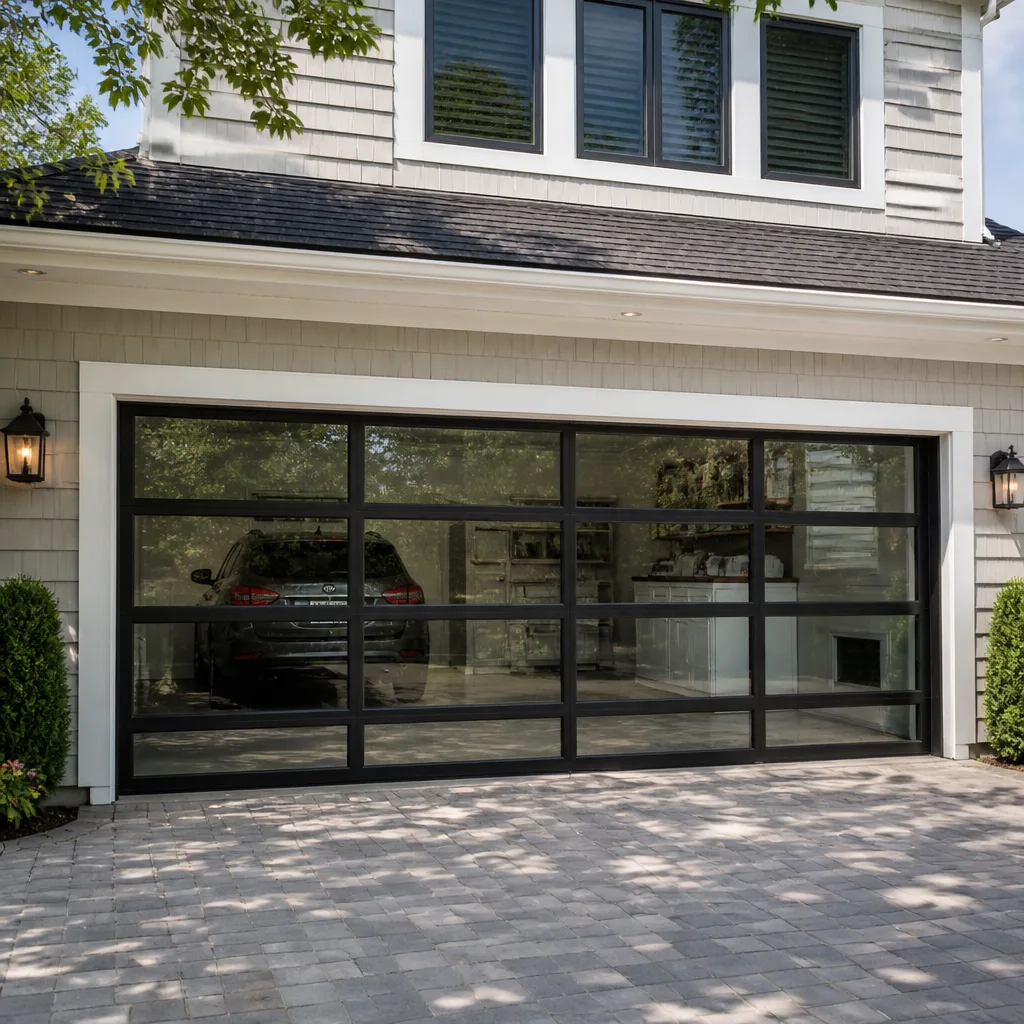 Full-view glass
 LiftMaster openers
 Chamberlain openers
Full 25-point door and opener safety check with every visit - springs, cables, rollers, tracks, and your LiftMaster or Chamberlain opener included
You get a price before we start. It does not change when the pro arrives.
Get your free estimateGarage Door Warning Signs: A Broomfield Homeowner’s Reference Guide
A garage door that hesitates for half a second before it moves isn’t “just slow.” It’s an opener working near its torque limit, and that usually means a spring has lost some tension and the motor is straining to cover for it. That half-second pause is a repair bill quietly growing. Most major garage door failures – a snapped spring, a stripped opener gear, a cable that jumps its drum – send at least two warning signals before they let go. Homeowners miss them because nobody ever told them what to listen and look for. This reference guide decodes those signals by component, ranks them by urgency, and shows you how to document what you’re seeing so a technician can diagnose it fast. It’s written for the way doors actually behave in Broomfield.
Quick Answer
The most important garage door warning signs are a door that pauses before moving, grinding or popping from above the door, a frayed or kinked cable, visible gaps between panels, and an opener that reverses for no clear reason. Any sign involving a cable or a broken spring means stop using the door immediately and call a professional. Grinding, squealing, and slow movement are earlier signals that usually allow a few more days of use while you arrange a repair. Catching them early is what keeps a small fix from turning into an emergency.
Styles & brands we work with
- Raised-panel steel
- Carriage house
- Modern flush
- Full-view glass
- LiftMaster openers
- Chamberlain openers
Table of Contents
- What the Noises Are Telling You
- Visual Warning Signs, Ranked by Urgency
- Behavioral Signals From Your Opener
- Signs That Mean Stop Using the Door Now
- How to Document Warning Signs Before You Call
- How Broomfield Weather Accelerates Wear
- A Simple Monthly Inspection Routine
What the Noises Are Telling You
Sound is the earliest diagnostic channel a garage door gives you, and it’s the one most people tune out. A healthy door is quiet – a low hum from the opener and a soft roll of the panels. When something changes, the type of noise usually points straight to a component. Here’s how we read them.
- Grinding from above the door: Almost always the torsion spring or the opener’s drive gear. A dry, rough grind that happens right as the door starts to lift points to spring tension issues. A grind that continues through the whole cycle, especially on a chain-drive unit, often means a worn gear inside the opener housing.
- Popping or a loud bang: A single sharp pop during operation is a classic sign of a torsion spring that’s partially wound and slipping, or a cable jumping its drum. Treat a pop followed by a door that suddenly feels much heavier as a stop-use event.
- Squealing: Usually a roller or hinge that’s lost lubrication, or a nylon roller that’s worn flat. Squealing is annoying but rarely urgent – it’s the one noise you can sometimes quiet with a proper roller and hinge inspection.
- Clicking that repeats: Often the opener’s logic board relay or a worn drive sprocket. On a Chamberlain or Genie unit, a rhythmic click with no movement can mean the motor is trying to start against a door that’s out of balance.
- Rattling on the way down: Loose track bolts, worn hinges, or panels that have separated slightly from their stiles. It’s worth a look because rattling panels tend to worsen.
The key insight: grinding and popping point to mechanical strain (springs, cables, gears), while squealing and rattling usually point to wear items (rollers, hinges, fasteners). That distinction matters when you’re deciding whether to wait or call. If you’re hearing a mechanical grind and the door still moves, our garage door repair service can usually trace the source in a single visit.
Visual Warning Signs, Ranked by Urgency
You don’t need to know how a garage door is built to spot the visual signs of trouble. Rank them in your head the way we do on a call: cables first, then springs, then panels, then tracks, then everything cosmetic. Here’s the ranked list, with what each one actually signals.
- Frayed or kinked cables (highest urgency): A cable that shows broken strands, a kink, or a spot where the wrap looks uneven is under extreme tension. This is a stop-use sign. Cables and springs are the two parts of a garage door that can cause serious injury, which is why we never suggest homeowners adjust either one.
- Rust patterns on springs and hinges: A spring that has visible rust streaks is often a spring that’s losing tension internally. It’s a warning, not an emergency, but it shortens the remaining life of the part. Broomfield’s dry winters and summer hail swings stress metal in a particular way that we’ll come back to.
- Gaps between panels: Daylight between sections means the panel seams or hinges have shifted. Left alone, that gap lets weather and debris into the door’s interior and can bind the panels against the track.
- Track misalignment: Look at the vertical and horizontal tracks from the side. Any bend, dip, or gap where the track meets the door’s rollers will eventually derail the door. A slightly bent track is fixable; a fully derailed door is a service call you don’t want.
- Sagging or bowed panels: Usually the result of a door that’s been operated against a failing spring. The panels take the load the spring used to carry.
- Cosmetic wear on hinges and rollers: Flat spots on rollers, loose hinge screws. Simple to fix and best fixed early.
If you can only remember one thing from this section: cable before spring, spring before panel, panel before track, and everything else can wait for a scheduled appointment. Wondering about the spring side of that list? Our garage door spring repair page covers the full picture.
Behavioral Signals From Your Opener
Your opener reports mechanical trouble through the way it behaves, not just the way it sounds. These signals are easy to overlook because they show up as small annoyances – a door that’s a little slower, a remote that needs an extra press. Each one traces to a specific cause.
- The half-second hesitation: The door pauses before it lifts. That’s the opener compensating for a spring that’s lost tension. The motor has to produce more torque to get the door moving, and it does it by ramping up slowly. This is the earliest and most reliable sign of a weakening spring.
- Slower opening than it used to be: Same cause, more advanced. If the door takes noticeably longer to open than it did a few months ago, the opener is working harder than it should. An opener that’s constantly working hard is an opener that will fail early – a stripped gear, a burnt motor, or a dead logic board.
- Reversal for no clear reason: A door that goes up, stops, and comes back down is either sensing an obstruction it doesn’t have, or is misreading balance. On safety-sensor-equipped openers, a dirty or knocked sensor triggers this. On older units, it can mean the limit switch or force setting has drifted.
- Remote range loss: A remote that used to work from the end of the driveway and now only works up close is usually a battery, a worn antenna wire, or a board starting to fail. Range loss that progresses quickly on a Genie or Chamberlain unit is worth diagnosing before the remote quits entirely.
- Random starting: A door that opens on its own is a separate problem (a stuck wall button, a paired neighbor’s remote, or a bad board). It’s not a mechanical warning, but it needs attention.
- Blinking opener light: Most units blink a code when they’ve hit an error. That blink pattern is a message. If you can read the pattern or find it in the manual, it saves the technician diagnostic time. If not, mention the blinking when you call.
The hesitation and slowing signals are the ones that save real money. A quiet opener that starts hesitating points to a fixable spring issue; the same door three months later is often a spring plus an opener. If you’ve noticed any of these, our garage door opener repair service can sort out whether the problem is the motor or the door it’s driving.
Signs That Mean Stop Using the Door Now
Some warning signs give you days. Others are a hard stop. The difference matters because operating a door with a broken spring or a compromised cable is how a routine repair becomes an emergency room visit. This is where we’re at our most direct: when you see these signs, stop using the door and call a professional.
Stop-use signs:
- A visible break in the torsion spring (the coil above the door) or the extension spring (the coil alongside the track).
- A cable that’s snapped, severely frayed, or hanging off its drum.
- A door that dropped suddenly or feels dramatically heavier than before.
- A door that won’t close and is stuck partway down, especially if it’s left in that position.
- A door that came off its track.
- Panels that have separated enough to leave a sharp or visible gap in a way that could allow fingers or clothes to catch.
Signs that allow a few more days of use:
- Squealing from rollers, hinges, or the opener.
- A slow opener, or a door that hesitates but still moves consistently.
- Rust streaks on springs or hinges.
- A slightly bent track with no derailment.
- A remote with reduced range.
- Cosmetic panel gaps with no functional cause.
For the “few more days” list, use those days to arrange a repair, not to keep using the door and hope. The springs and the cables are the two components where nobody – homeowner or handyman – should be doing anything but calling. Garage door springs are under extreme tension and can release without warning; we’ve seen homeowners try to adjust a spring themselves and end up injured. The right move is always a trained technician.
How to Document Warning Signs Before You Call
Documenting what you’re seeing before you call is the single easiest way to speed up diagnosis and get a specific estimate instead of a vague range. It also makes sure you and the technician are talking about the same thing. Here’s the routine we suggest to Broomfield homeowners.
- Photograph the whole door from a step back. A full door photo shows panel alignment, track shape, and any gaps between sections.
- Photograph the close-up of each problem area. A cable at the break, a spring coil, a track bend, a panel seam. Good light and a steady hand beat a zoomed-in blurry shot.
- Record a short video of one full open-and-close cycle. Sound, movement, and hesitation all show up on video. This is the most useful single thing you can bring to the call.
- Write down which sign you first noticed, and roughly when. “I started hearing the grind about three weeks ago” tells the technician something that “it’s been making a noise” doesn’t.
- Note any change in the door’s behavior in the days since. Did the hesitation get worse? Did the noise change? Did the opener start blinking?
- Check the opener’s brand and model if it’s on the label. Knowing you have a Chamberlain or a Genie means the technician arrives knowing what they’re looking at.
- Have your cycle count or estimate of daily opens ready. Doors that open and close four times a day and doors that open and close fifteen times a day age very differently.
With photos and a short video in hand, a technician can often pre-diagnose the issue and bring the right parts. That saves you a second visit and makes the first estimate more accurate.
How Broomfield Weather Accelerates Wear
Broomfield sits between the mountains and the plains, and its weather moves through temperature swings that garage door parts feel directly. The pattern that matters most: warm afternoons softening the lubricating film on hinges and rollers, followed by hard overnight drops that contract metal. That stretch-and-shrink cycle is the reason so many doors here start making noise around the shoulder seasons.
A few local specifics worth knowing:
- Spring cycle life: A spring does its best work in a stable temperature. In a climate with sharp daily swings, springs work against expanding and contracting metal around them, and that shortens how many cycles a spring delivers before it cracks. This is why we take spring condition seriously on any door that’s been in place for years, even before a break happens.
- Hail seasons: Broomfield gets hail. A door that’s taken a hit from a hailstorm can develop dents that don’t show as obvious damage but do put the panels out of true. A door with a dented panel often runs slightly out of alignment and puts extra wear on the rollers and track.
- Dry air: Low humidity dries out lubricant faster than a humid climate would. Hinges and rollers squeal sooner here. That squeal is the neighborly early warning.
- Wind and dust: Plains wind pushes grit into the tracks. Grit then grinds against the rollers. A monthly wipe of the tracks is one of the cheapest maintenance tasks there is.
If your door is making noise that sounds like it’s tied to the season – quieter in the mild weeks, louder during a temperature swing – that’s a spring or a hinge telling you it’s due for a check. The good news is that most of what Broomfield weather does to a door is manageable with routine attention.
A Simple Monthly Inspection Routine
A five-minute inspection once a month catches nearly every warning sign in this guide before it becomes expensive. None of it requires touching the springs or cables. Here’s the routine, in order.
- Stand outside and look at the door from the street. Any bowing, sagging, or gap between panels shows up from a step back that you’d miss up close.
- Run the door up and down once and listen. Compare the sound to last month. Grinding, popping, and squealing are the three to catch.
- Look at the torsion spring above the door. Rust streaks on the coil? Any visible separation in the metal? Do not touch it – just look.
- Look at the cables on both sides. Fraying, kinks, or cables that have jumped off the drum. Stop if you see any of these.
- Run the safety sensors test. Wave a hand or a broom in front of the sensor eyes and confirm the door reverses. This is a safety check, not a mechanical one, and it’s worth doing monthly.
- Wipe the tracks with a dry cloth. Grit comes out; lubricant stays in. Don’t spray lubricant into the tracks unless you know your door’s specs say to.
- Test the balance. Disconnect the opener (pull the release) and lift the door halfway by hand. A balanced door stays roughly where you put it. A door that drops on its own has a spring problem.
- Check the opener’s behavior. Notice any hesitation, reversal, or remote range change since last month.
That’s the whole routine. The value isn’t that you’re going to fix anything yourself – it’s that you’ll know what changed and when. That knowledge is what turns “my door is making a noise” into “my door hesitates on the way up and the spring has a rust streak on the right side,” which is a much easier call for a technician to act on.
Common Mistakes to Avoid
- Blaming the opener for a door problem. When a door slows down, most homeowners assume the motor is going out. More often, the spring has lost tension and the opener is doing the work. Replacing the opener without fixing the spring just wears out the new opener. Diagnose the door before the motor.
- Using a door with a broken spring. Some homeowners will push the door up by hand with the opener disconnected, thinking they’ll “just do it manually” until they can get someone out. That’s how panels get damaged and how people get hurt. Springs are the reason the door feels light. Without them, it’s not.
- Lubricating the wrong things. Spraying lubricant into the tracks attracts grit, which is the last thing Broomfield wind needs. Ask before you spray.
- Ignoring a slightly bent track. A small bend is fixable in a service call. Left alone, it derails the door, and that’s a bigger repair.
- Overlooking the safety sensors. A door that reverses for no reason is often a dirty or knocked sensor. It’s worth checking before assuming something internal has failed.
- Skipping the monthly look-over. A five-minute check once a month is the single biggest factor in how long a door lasts. It’s not a chore; it’s the cheapest maintenance you’ll do.
- Calling after the failure, not before. A hesitation that gets ignored for months turns into a spring failure plus an opener failure plus a panel replacement. The signs were there the whole time.
See the difference
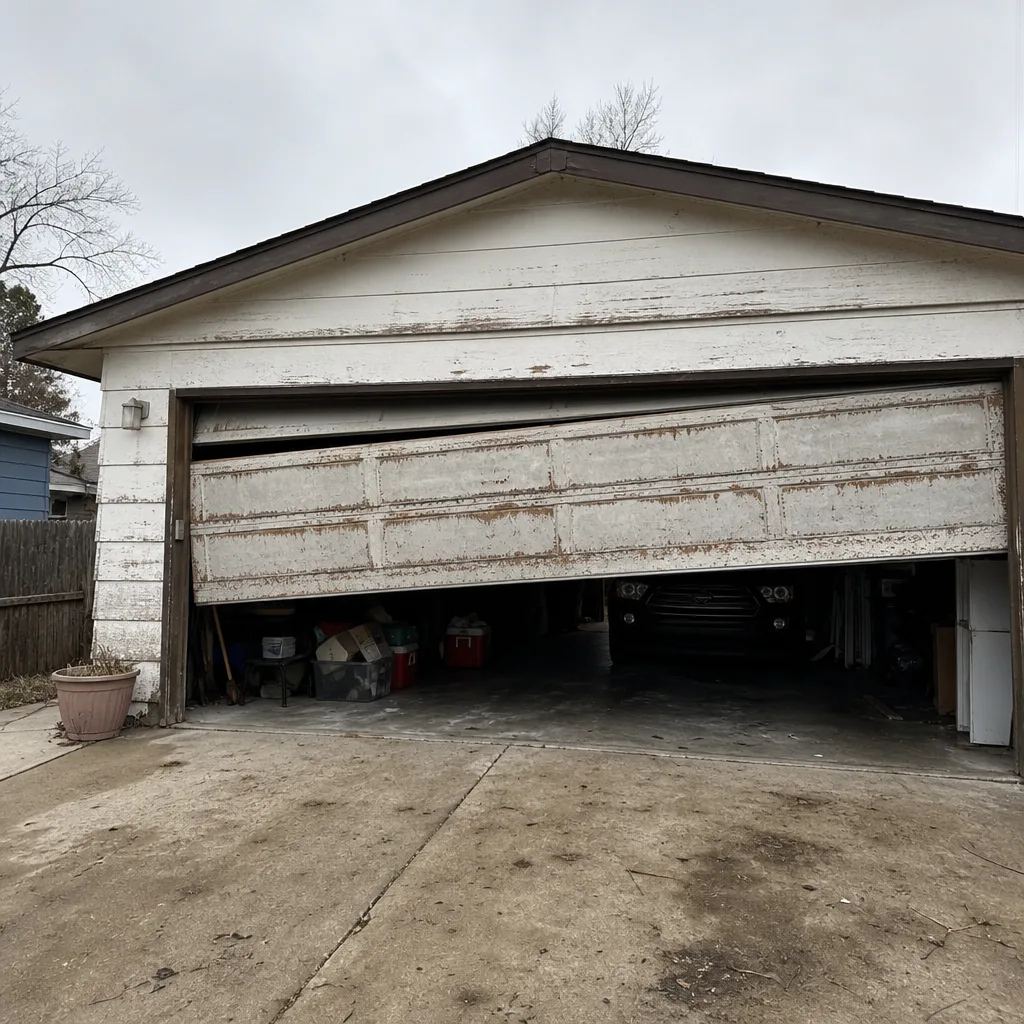 Before
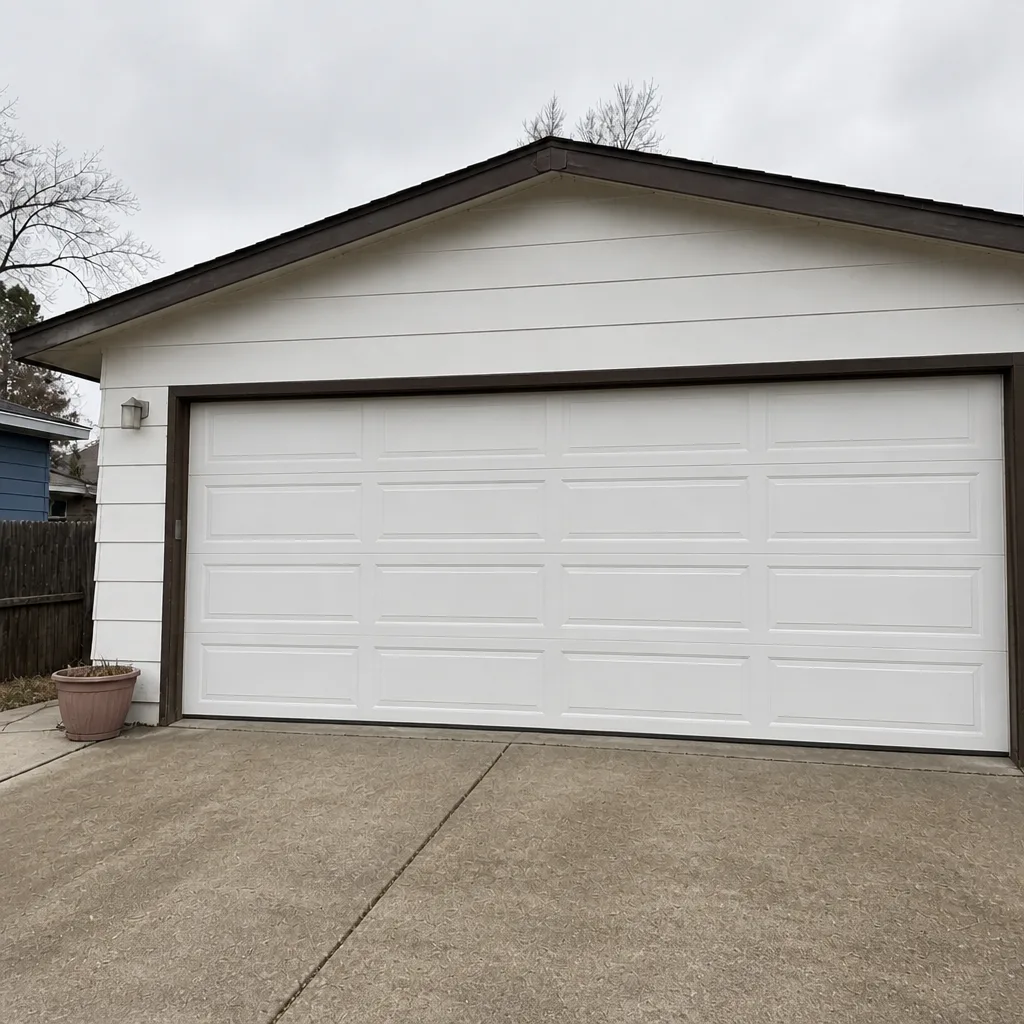 After
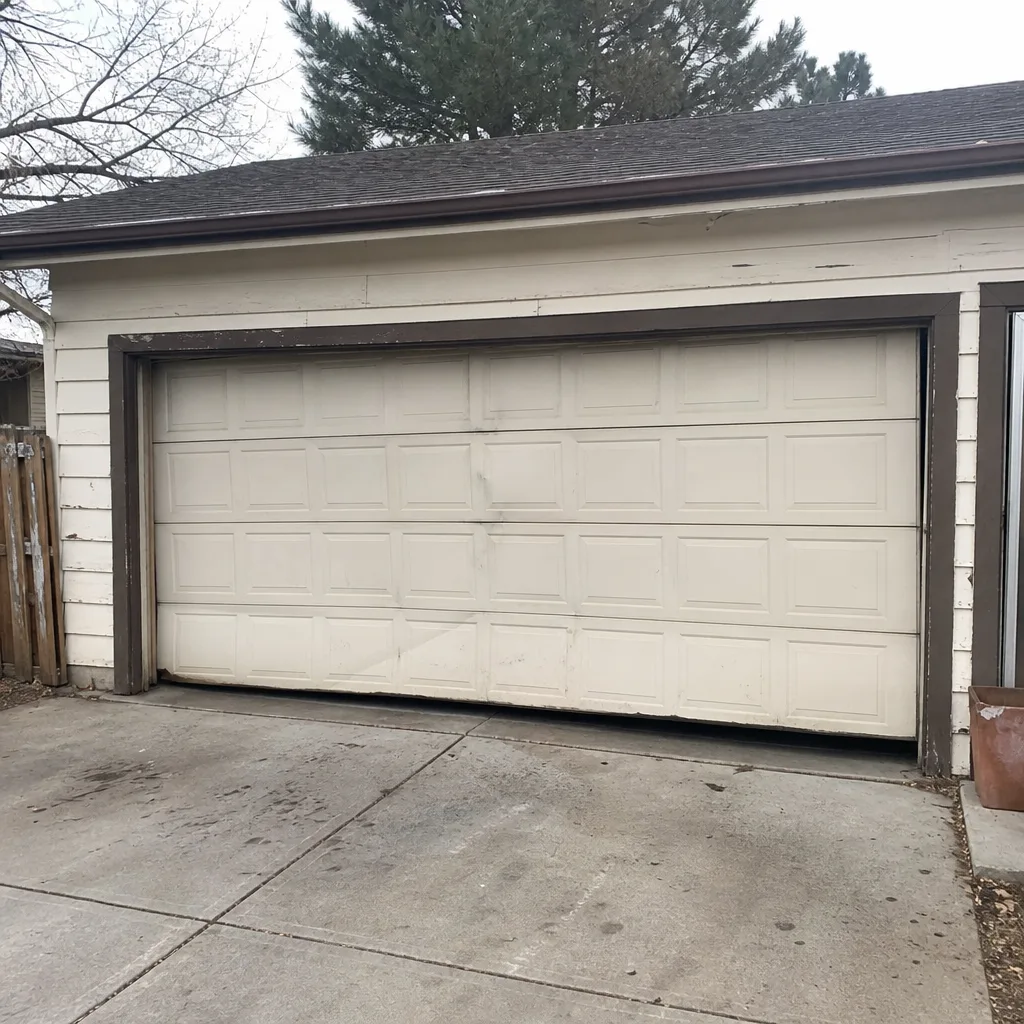 Before
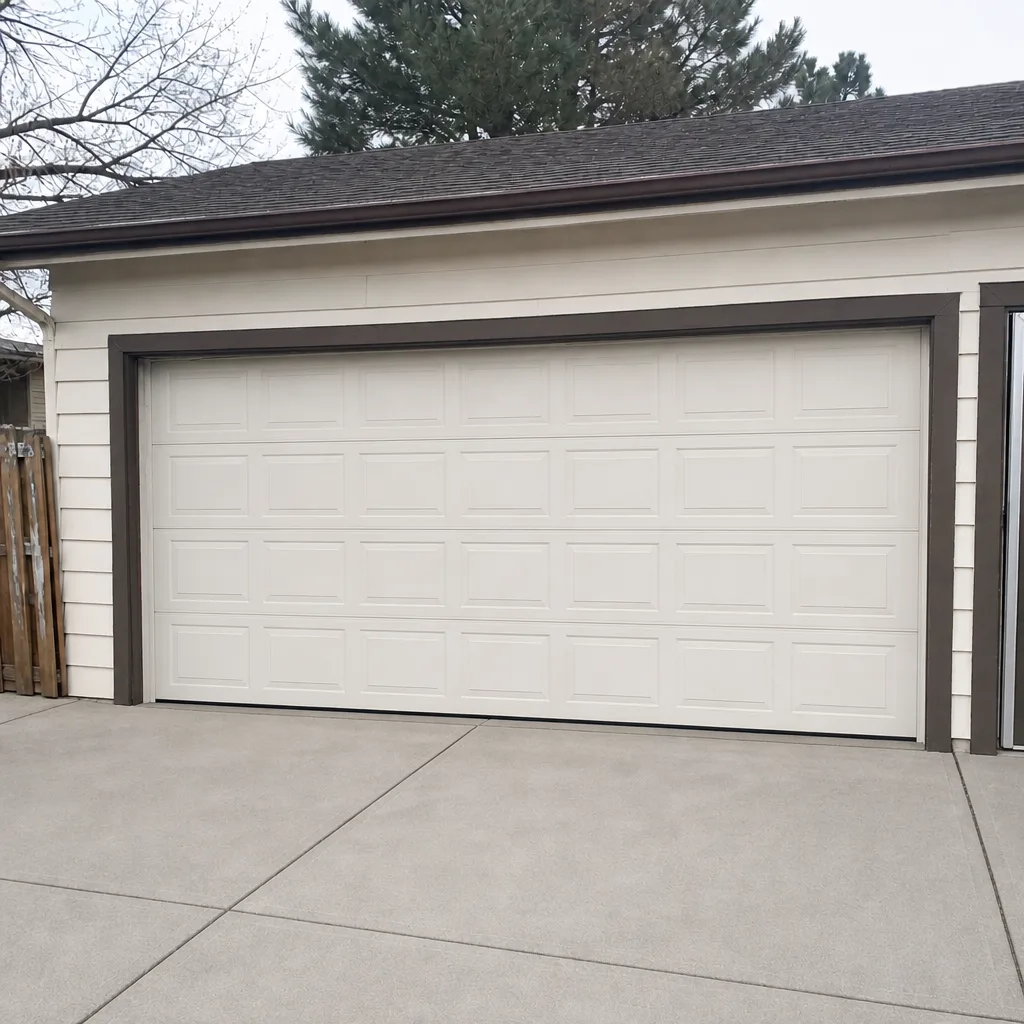 After
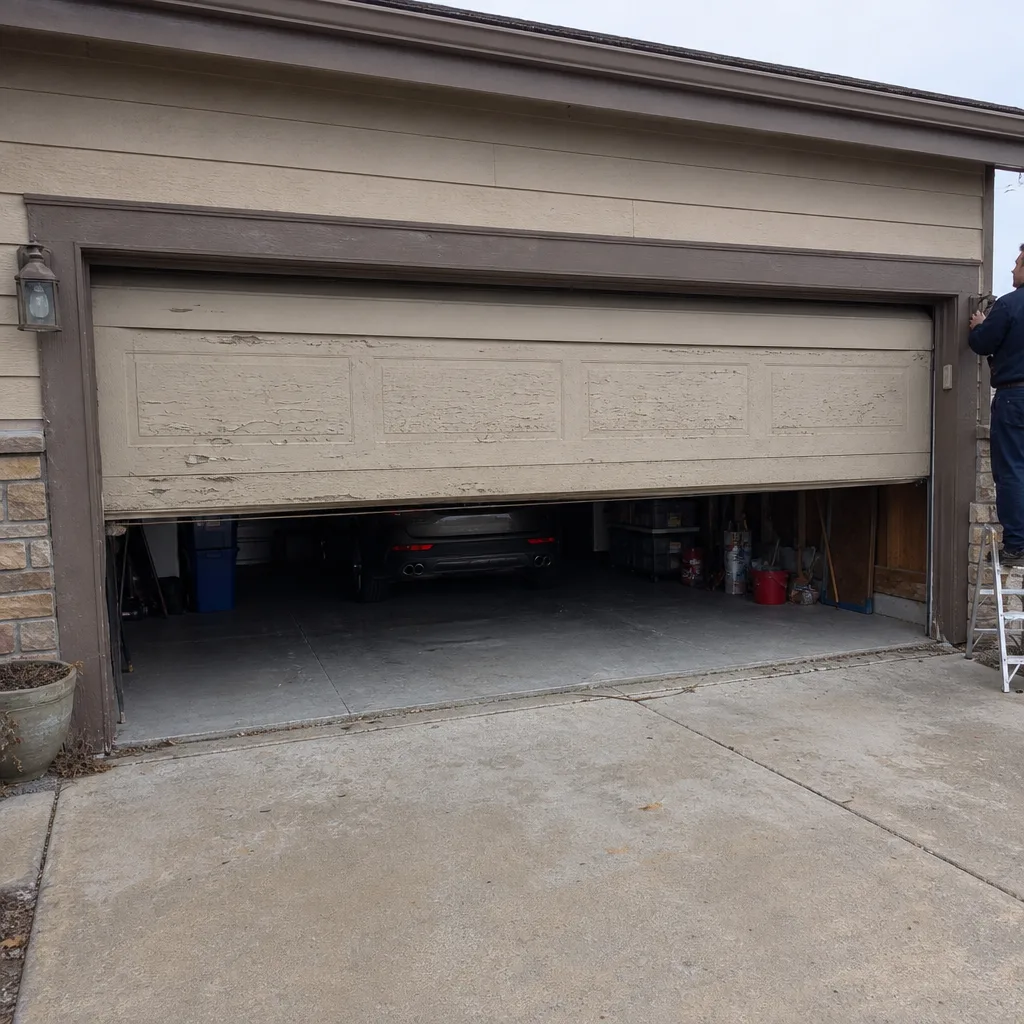 Before
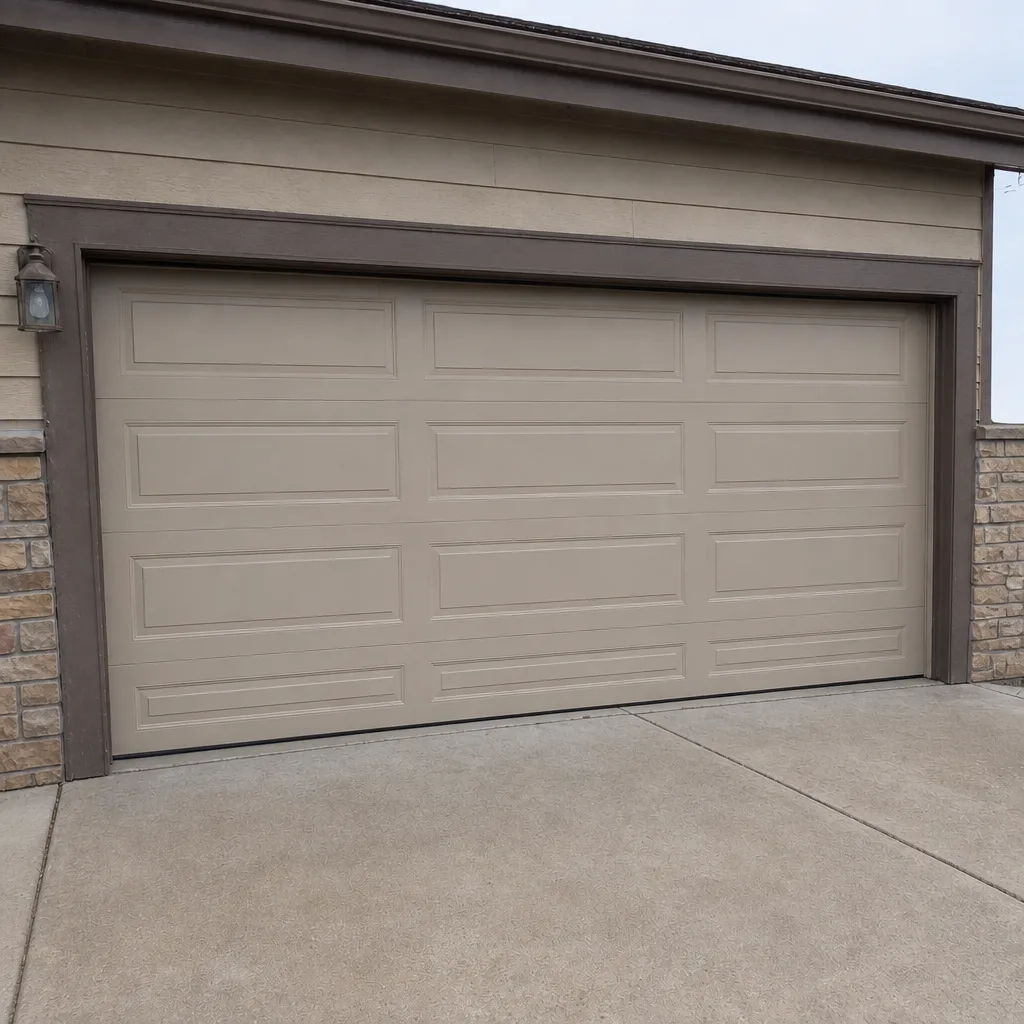 After
When to Call a Professional
Call a professional for anything involving springs, cables, or the tracks – those are the three components where a wrong decision can hurt someone. Call sooner (today, not next week) for grinding, a slow or hesitant opener, a clearly bent track, or a door that reverses for no reason. Call right now for a snapped spring, a broken cable, or a door off its track. Broomfield Garage Door Repair Pros offers free estimates in Broomfield – call (833) 625-1667. Our technicians have up to 14 years of experience and work on LiftMaster, Chamberlain, Genie, Clopay, Amarr, Wayne Dalton, Craftsman, and Raynor systems, so a quick call covers whatever brand is already in your garage. Emergency service is genuinely available for a door that fails at night or before an early departure.
Frequently Asked Questions
A door that hesitates for half a second before it lifts. That small pause is the opener compensating for a spring that’s lost some tension, and it’s the earliest signal you’ll get before a spring breaks. Catching it means the fix is a spring adjustment rather than a spring plus an opener. If you’ve noticed the hesitation, call (833) 625-1667 for a free estimate.
Usually not. Grinding, squealing, and rattling are warning signs, not emergencies, and they generally allow a few more days of careful use while you book a repair. Popping, a loud bang, or a door that suddenly feels much heavier is different – those mean stop using the door and call right away. Noises are the cheapest warnings to act on.
Yes, and they follow a pattern. The cycle usually shows a hesitating door first, then a slower door, then visible rust streaks on the spring, then the break. Some springs break with little visible warning, which is why the hesitation and slowdown signals are worth paying attention to. Springs are under extreme tension and can cause serious injury, so a professional always handles the repair.
No. A frayed cable is under extreme tension and can snap without warning, which makes it one of the most dangerous parts of a garage door system. Our guidance is always to stop using the door and have a trained technician handle it. Never attempt to adjust or remove a cable on your own.
Once a month is the right cadence for most homes. Broomfield’s temperature swings and dry air accelerate wear on hinges, rollers, and lubricant, so monthly attention is what keeps a door ahead of its own problems. Five minutes a month, on the routine above, is enough. A technician inspection once a year fills in what the monthly check can’t see.
No, not if we’ve done our job. The written estimate quotes the price before any work starts, and that’s the price for the job as agreed. If a photo or a video you provide up front shows something extra, that’s discussed before work begins, never after. Call (833) 625-1667 for a free estimate and to set up a visit.
The Bottom Line
Your garage door is one of the most-used mechanical systems in your home, and it warns you before it fails. The half-second hesitation, the grind, the rusty streak on the spring, the remote that needs an extra press – each one points to a specific component and a specific fix. Broomfield weather makes some of those signals arrive sooner, so the monthly inspection matters more here. Document what you see, stop using the door when it’s a cable or a spring, and call before the small fix becomes the big one. That’s the whole guide in a paragraph, and it’s why we wrote it this way. Broomfield Garage Door Repair Pros connects you with a trained local professional who can read those signals in minutes. Call (833) 625-1667 for a free estimate.
For a broader look at what we do, start with Broomfield Garage Door Repair Pros.
Written by the team at Broomfield Garage Door Repair Pros.